Article: Dog Harness Sizing Guide for a Better Fit
Dog Harness Sizing Guide for a Better Fit
That little side-step your dog does when a harness goes over their head? Sometimes it is pure drama. Sometimes it is a fit issue. A good dog harness sizing guide is not just about finding the size chart and hoping for the best. It is about choosing walkwear that feels secure, comfortable, and easy to wear for the dog you love like family.
When a harness fits well, walks feel calmer. Your pup can move naturally, you get better control without unnecessary pressure, and the whole look is more polished too. When it fits poorly, even the prettiest harness can rub, shift, gap, or make your dog reluctant to head out the door. That is why sizing matters more than many pet parents realize.
Why a dog harness sizing guide matters
Harness sizing is not standardized across brands. A small in one style may fit like a medium in another, and the cut matters just as much as the label. Step-in harnesses, vest harnesses, and more structured walk harnesses all sit a little differently on the body.
Your dog’s breed can also be misleading. Two mini Goldendoodles can have completely different chest shapes. A Frenchie may have a broad chest and narrower waist, while a Cavalier may need a softer fit through the shoulders. The better approach is to measure your own dog, compare those measurements to the specific harness chart, and think about coat, build, and movement before choosing a size.
How to measure your dog correctly
You only need a soft measuring tape and a few calm minutes. If your pup gets wiggly, treats help. So does measuring when they are relaxed instead of mid-zoomie.
The most important measurement is usually the chest girth. This is the widest part of your dog’s ribcage, typically right behind the front legs. Wrap the tape around that area snugly but not tightly. You want it close enough to be accurate, not cinched down into the fur.
The second measurement to check is the neck. For many harness styles, especially those with a neck opening, this matters quite a bit. Measure around the lower part of the neck where the harness will actually sit, not high up where a collar might rest.
Some brands also include a back length or weight range. These can be helpful, but chest girth usually carries the most weight in sizing decisions. Weight alone is rarely enough because dogs carry that weight very differently.
If your dog has a fluffy coat, measure with that in mind. A thick doodle coat can make a harness feel perfect one week and noticeably looser after grooming. If your pup is between sizes and due for a haircut soon, that can affect which option makes more sense.
What a properly fitted harness should look like
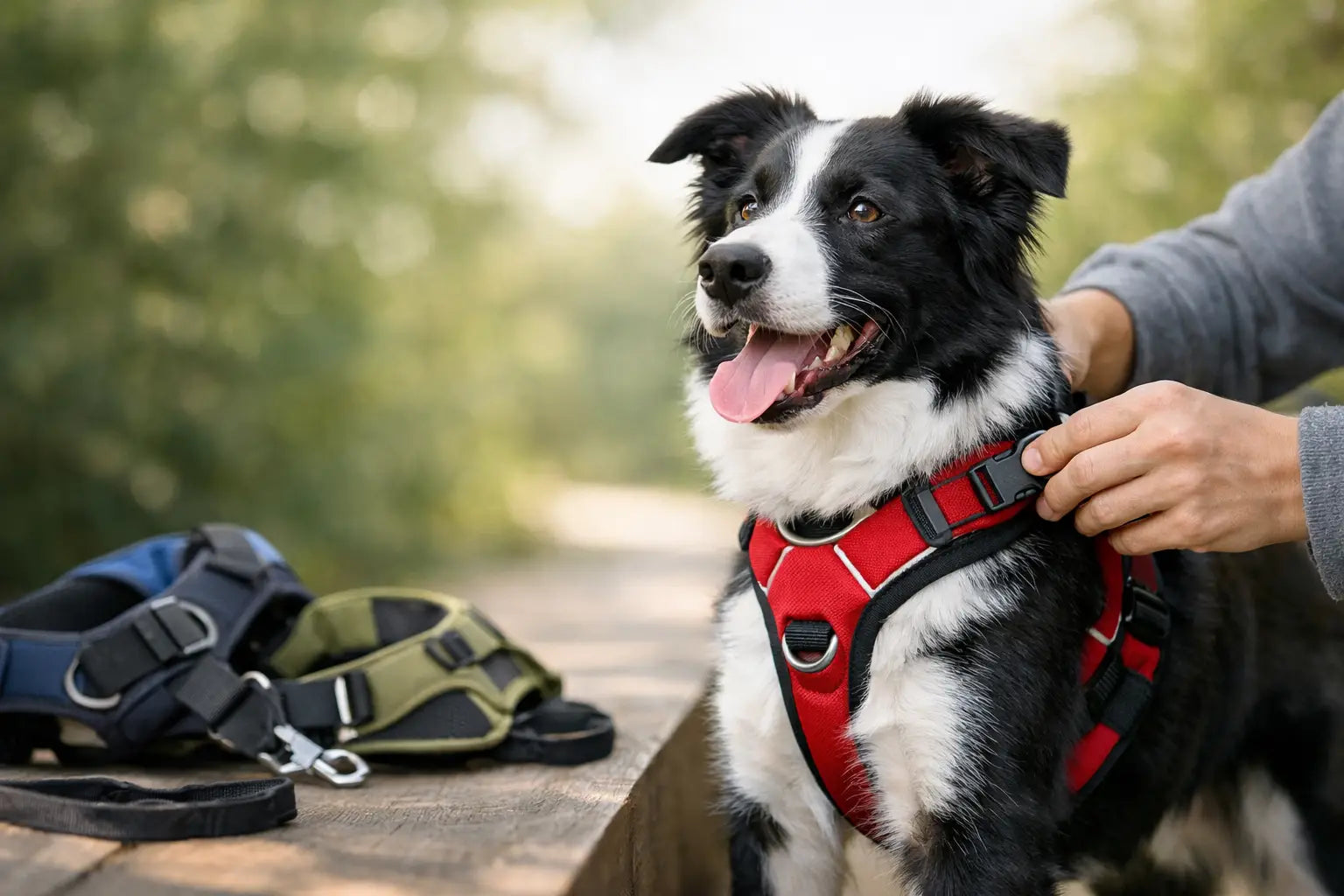
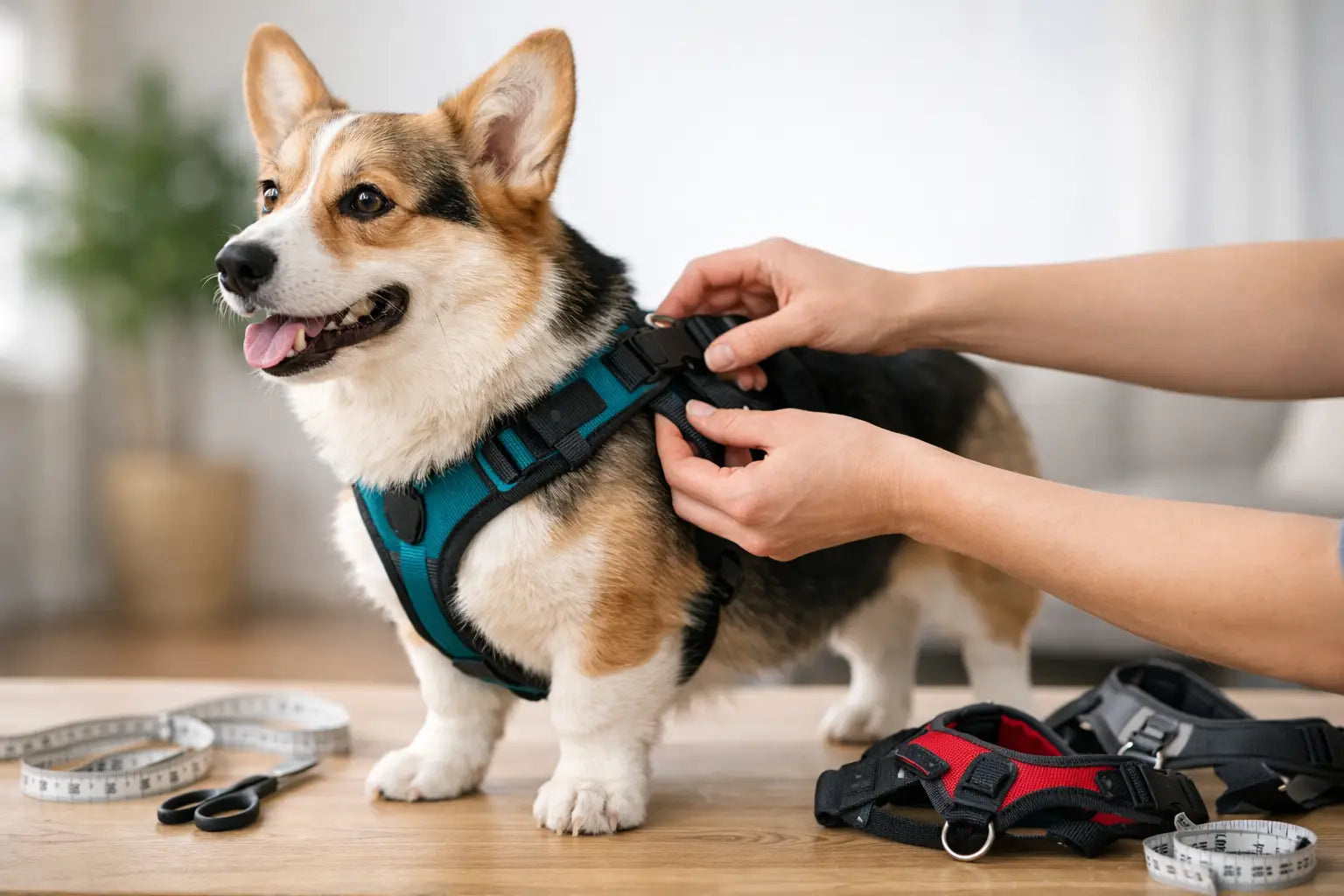
A good fit should feel secure without looking restrictive. You should be able to slip two fingers between the harness and your dog’s body in most areas. Less than that can be too tight. More than that may allow too much movement or even slipping out.
Watch the chest panel and straps when your dog walks. The harness should stay in place rather than twisting to one side or sliding back and forth. It should not ride up into the throat, press into the armpits, or sit so low that it interferes with front leg movement.
Your dog’s body language says a lot too. If they freeze, scratch at the harness, or seem unusually hesitant on walks, the issue may be fit rather than personality. Some dogs need a short adjustment period with any new gear, but ongoing discomfort is worth paying attention to.
Signs the harness is too small
A too-small harness often leaves obvious clues. You may notice straps digging into the skin or flattening the coat in a way that looks tight rather than tidy. Redness under the arms, chafing on the chest, or marks after a walk all point to a fit problem.
Movement can also look restricted. If your dog takes shorter strides, seems stiff through the shoulders, or resists putting the harness on, size may be the issue. This is especially common in dogs with deeper chests or fuller coats who technically fit the chart but need a little more room in real life.
Signs the harness is too big
A harness that is too big can be just as problematic. It may shift side to side, droop across the chest, or create gaps around the neck and shoulders. Some dogs can back out of a loose harness surprisingly fast, which turns a simple walk into a stressful moment.
Larger fits can also cause rubbing because the harness moves too much with each step. Pet parents sometimes assume rubbing only happens when something is tight, but excess movement creates friction too. Secure and stable is the goal.
Between sizes? Here is how to decide
This is where harness shopping gets a little less black and white. If your dog falls between sizes, the right choice depends on the style and your dog’s build.
If the harness has multiple adjustment points, sizing up may work beautifully because you can fine-tune the fit. If the design has less flexibility, sizing down may be better only if your dog is on the lower end of the measurement range and has a slimmer frame. For broader chests, fluffier coats, or dogs who dislike anything snug over the shoulders, the larger size is often the kinder option.
Age matters too. Puppies are a moving target, and sizing for growth can be practical, but not if the harness is loose enough to be unsafe right now. Senior dogs can need extra softness and easy-on shapes that avoid too much lifting or handling. The best size is not always the one with the longest future use. It is the one that fits well for the walks you are taking now.
Dog harness sizing guide by harness style
Different harness styles fit differently, even in the same size.
Step-in harnesses
These are often a favorite for dogs who dislike overhead gear. Because the dog steps into the harness, chest measurement becomes especially important. A step-in style should lie flat and secure once buckled, without pulling awkwardly at the shoulders.
Vest harnesses
Vest styles can feel cozy and supportive, especially for smaller dogs or pups who do better with a softer, more wrapped fit. Pay attention to chest coverage and underarm clearance here. Too much fabric can rub if the cut is off.
Adjustable walking harnesses
These usually offer the most flexibility and are often easiest to fit well across different body types. If your dog has a broad chest, narrow waist, or in-between proportions, this style can be the most forgiving.
Common sizing mistakes dog parents make
One of the biggest mistakes is guessing based on breed or weight. It feels convenient, but it is not reliable. Another common issue is measuring too loosely because the dog has long fur. The tape should follow the body, not hover over fluff.
Pet parents also sometimes focus on getting the harness on and off easily, then overlook how it sits in motion. A harness can seem fine while your dog is standing still and reveal fit issues the moment they start walking. That quick test around the house matters.
And then there is the style factor. We love a beautiful harness as much as anyone, but if your dog’s shape does not suit that cut, the fit will never feel quite right. The best walkwear balances comfort, function, and that polished boutique look.
How to test the fit at home
Once the harness is on, adjust every strap before making a decision. Then let your dog walk around indoors for a few minutes. Watch from the front, side, and above.
Check whether the neck opening sits neatly without gaping, whether the chest strap stays in place, and whether the harness remains centered. Run your fingers around the edges to feel for pressure points. If your pup seems comfortable and the harness stays secure through movement, you are very close.
For especially active dogs, test during a short leash walk before committing to longer outings. Trotting, sniffing, and turning can reveal things that standing still never will.
A better fit makes every walk sweeter
The right harness should feel like an everyday essential you and your dog both trust. It should support safe walks, comfortable movement, and those little daily moments that matter so much, from a quick morning potty break to a sunset stroll with your favorite leash and treat pouch.
At Luna Doodle Boutique, we believe practical pieces can still feel elevated. And when it comes to harnesses, the sweetest choice is the one that fits your pup beautifully, lets them move with ease, and makes heading out together feel simple.