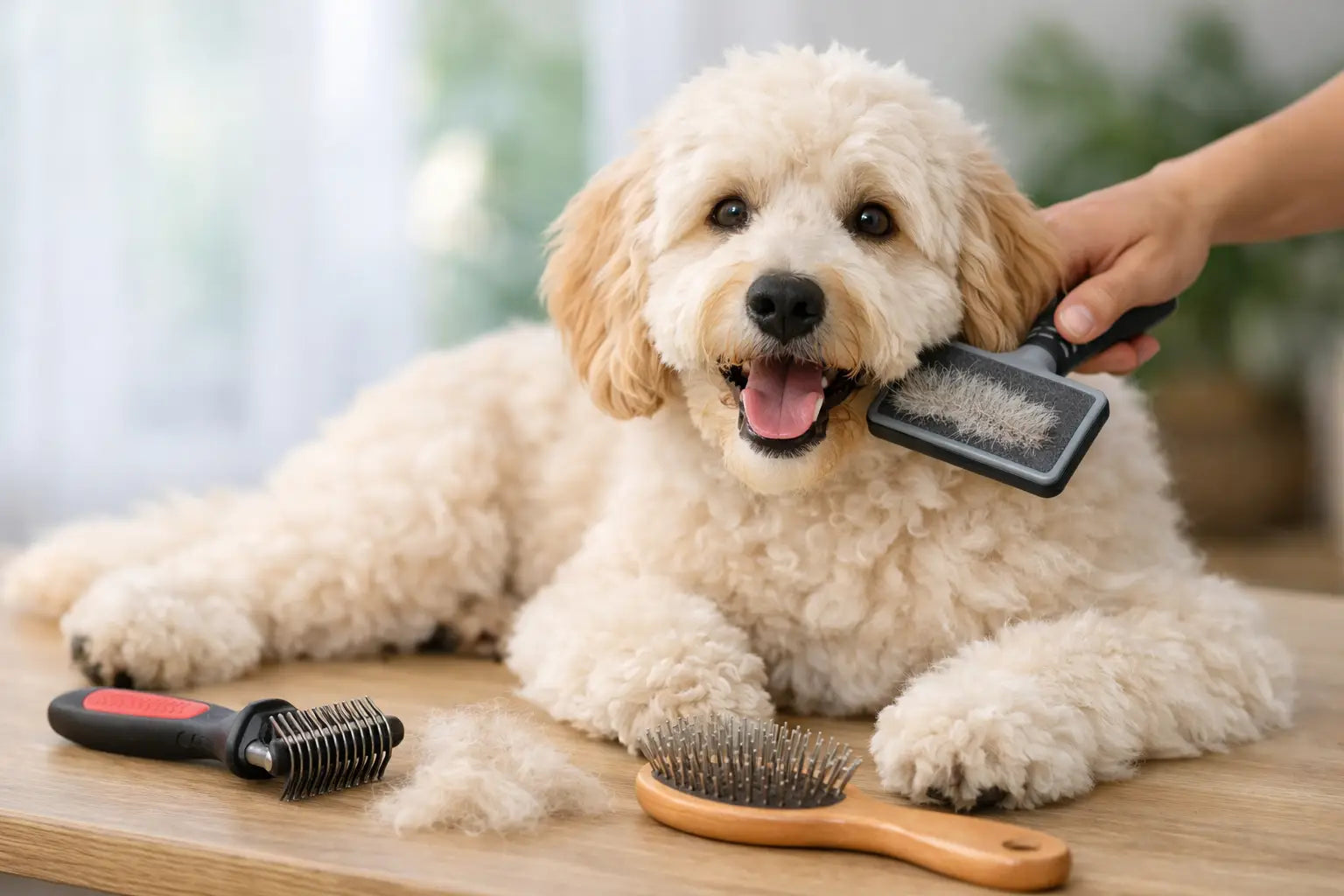
Best Grooming Brush for Doodles
That soft, cloud-like doodle coat is adorable right up until your brush glides over the top and misses the tangles hiding underneath. Finding the best grooming brush for doodles is less about picking the prettiest tool and more about choosing one that can actually work through a dense, curly, often high-maintenance coat without making grooming feel like a wrestling match.
Doodles are famous for their teddy-bear look, but that look comes with real upkeep. Goldendoodles, Labradoodles, Bernedoodles, Sheepadoodles, and other doodle mixes can have coats that range from loose waves to tight curls, and each texture behaves a little differently. The brush that works beautifully for one pup may barely make progress on another. That is why the right answer is usually about brush type, pin length, and how you plan to use it at home.
What makes the best grooming brush for doodles different?
A doodle coat is rarely simple. Many have a thick, plush top layer with a dense undercoat or tightly packed curls closer to the skin. That combination traps loose hair, dirt, and tiny tangles fast. If the brush is too soft, too short, or too flimsy, it only smooths the surface and leaves the hidden mats behind.
The best grooming brush for doodles usually needs long pins that can reach through the coat, enough flexibility to avoid scraping the skin, and enough structure to detangle without pulling excessively. In most cases, doodle owners do best with a slicker brush as their main tool, then a comb as a backup to check their work.
This is also where many dog moms get frustrated. A brush can look premium, feel comfortable in your hand, and still be wrong for your dog’s coat. Grooming tools are one of those elevated essentials where pretty matters, but performance matters more.
The brush type most doodle owners need first
Slicker brushes are usually the top choice
If you are trying to choose one primary tool, a slicker brush is usually the strongest contender. This type of brush uses many fine wire pins set close together, which helps separate curls, lift debris, and work through developing knots before they turn into mats.
For doodles, a slicker brush with longer pins is usually the sweet spot. Short pins tend to skim the outer fluff. Longer pins can penetrate deeper into the coat, which is exactly what you want when your dog has that dense, velvety texture that mats in the armpits, behind the ears, around the collar line, and along the legs.
A good slicker brush should feel effective, not harsh. If the pins are overly stiff or the head is too aggressive, sensitive dogs may start avoiding grooming sessions. If your doodle is young, nervous, or particularly tender-skinned, a softer slicker may be the better fit, even if it means taking a little more time.
A comb is not optional
Technically, a comb is not a brush, but for doodle grooming it is part of the equation. After brushing, a steel comb helps you check whether you actually got through the coat. If the comb catches, there is still a tangle there.
This matters because doodle coats are experts at looking brushed when they are not. Plenty of pet parents finish a grooming session with a fluffy-looking pup, only to discover mats later at the skin level. A brush fluffs. A comb verifies.
How to choose the best grooming brush for doodles by coat type
For wavy coats
Wavy doodles often have that loose, tousled look many owners love. These coats can be a little more forgiving than very curly coats, but they still tangle easily, especially if your pup wears harnesses, sweaters, bandanas, or rain gear often.
A medium-to-firm long-pin slicker brush usually works well here. You want enough reach to get below the wave pattern and enough give that daily brushing feels easy. Wavy coats may not mat as tightly as curly coats, but they can form broad tangles that spread quickly.
For curly coats
Curly coats need more consistency and usually more brush power. Tight curls trap loose hair in place instead of letting it fall out, which is why mats can build so quickly. In this case, a firmer long-pin slicker brush is often the better choice, especially if your doodle has a thick coat and goes longer between professional grooming appointments.
The trade-off is comfort. A firmer brush can be more efficient, but only if your dog tolerates it well. Gentle technique matters just as much as the tool.
For fleece or cottony coats
Some doodles have that extra-soft, almost cotton-candy texture that feels dreamy and tangles if you so much as look at it wrong. These coats often need frequent line brushing with a high-quality slicker brush and a comb afterward.
This is the coat type where brush quality shows up fast. A weak brush folds under pressure and leaves too much undone. A well-made one keeps its shape and reaches the layers where tangles start.
Features worth paying attention to
Pin length is one of the biggest factors. For many doodles, longer pins are simply more useful than short ones. They reach through bulk and help avoid that frustrating topcoat-only brushing that leaves the underlayers untouched.
Brush head size matters too. A larger head can speed up grooming on the body, but a smaller one is easier to control around the face, feet, and legs. Some owners prefer one all-purpose brush, while others like a larger slicker for the body and a smaller detail brush for delicate spots.
Handle comfort is easy to overlook until you are 20 minutes into brushing a damp, wiggly doodle. If you groom at home often, an ergonomic handle is worth it. Good grip and balance make the process feel calmer for both of you.
Finally, think about how easy the brush is to clean. Doodle coats can fill a brush quickly, and if removing trapped hair is annoying, that little inconvenience adds up.
What does not work well for most doodles
Bristle brushes are lovely for shine, but they are usually not enough on their own for a doodle coat. They sit too close to the surface and do very little for tangles. Pin brushes can work for light maintenance on some looser coats, but many doodle owners find they do not have enough detangling power once the coat gets thick.
Deshedding tools are another one to approach carefully. Since many doodles are mixed breeds with unique coat patterns, these tools are not always appropriate and can remove more than you intend. If your dog’s coat is prone to matting, focus first on proper brushing and combing rather than aggressive coat removal.
Technique matters as much as the brush
Even the best brush can disappoint if you are only running it over the top layer. Doodles usually do best with line brushing, where you separate the coat into sections and brush from the skin outward in small areas. It takes a little more patience, but it is how you find the hidden knots before they become a bigger issue.
A light mist of grooming spray can help reduce static and make brushing smoother, especially on dry coats. Never force a brush through a mat. That is where grooming turns uncomfortable fast. Small tangles can often be teased apart gently, but dense mats may need a professional groomer.
Consistency also makes everything easier. A few minutes several times a week is far kinder than a long, stressful detangling session after the coat has already started felting.
So which brush is the best grooming brush for doodles?
For most doodles, the best place to start is a high-quality long-pin slicker brush paired with a steel comb. That combination handles the real needs of the coat: reaching through the fluff, loosening tangles, and confirming that the coat is fully brushed through.
If your doodle has a softer, finer coat or is sensitive during grooming, choose a gentler slicker. If your pup has a dense, curly, very mat-prone coat, a firmer long-pin slicker will usually do a better job. There is no single perfect brush for every doodle because doodle coats are famously inconsistent, even within the same breed mix.
That is the part worth remembering. The best grooming tool is the one that suits your dog’s specific coat and makes regular grooming realistic in your routine. A beautiful coat is not about one dramatic grooming day. It comes from small, loving habits that keep your pup comfortable, fluffy, and ready for all the cuddles, compliments, and photo moments that come with doodle life.
If you are choosing for your own pup, think less about hype and more about what happens on brush day. The right brush should help you care for the coat you actually have, not the one a package promises. When grooming feels gentler, more effective, and a little more polished, both you and your doodle can enjoy it a lot more.