What Leash Material Is Best for Dogs on Walks?
A leash can look perfectly darling beside your pup’s collar, then feel completely wrong the moment it gets soaked in rain, slides through your hand, or pulls against a determined squirrel-chaser. When dog moms ask what leash material is best for dogs, the honest answer is that there is no single winner for every pup. The best leash is the one that feels secure in your hand, suits your dog’s walking style, and holds up beautifully through the little everyday adventures you share.
For many families, a leash is used more than almost any other piece of walkwear. It deserves the same thoughtful attention as a well-fitted harness or a favorite collar. Material affects comfort, control, weight, durability, cleaning, and yes, how polished your pup looks on the sidewalk.
What leash material is best for dogs?
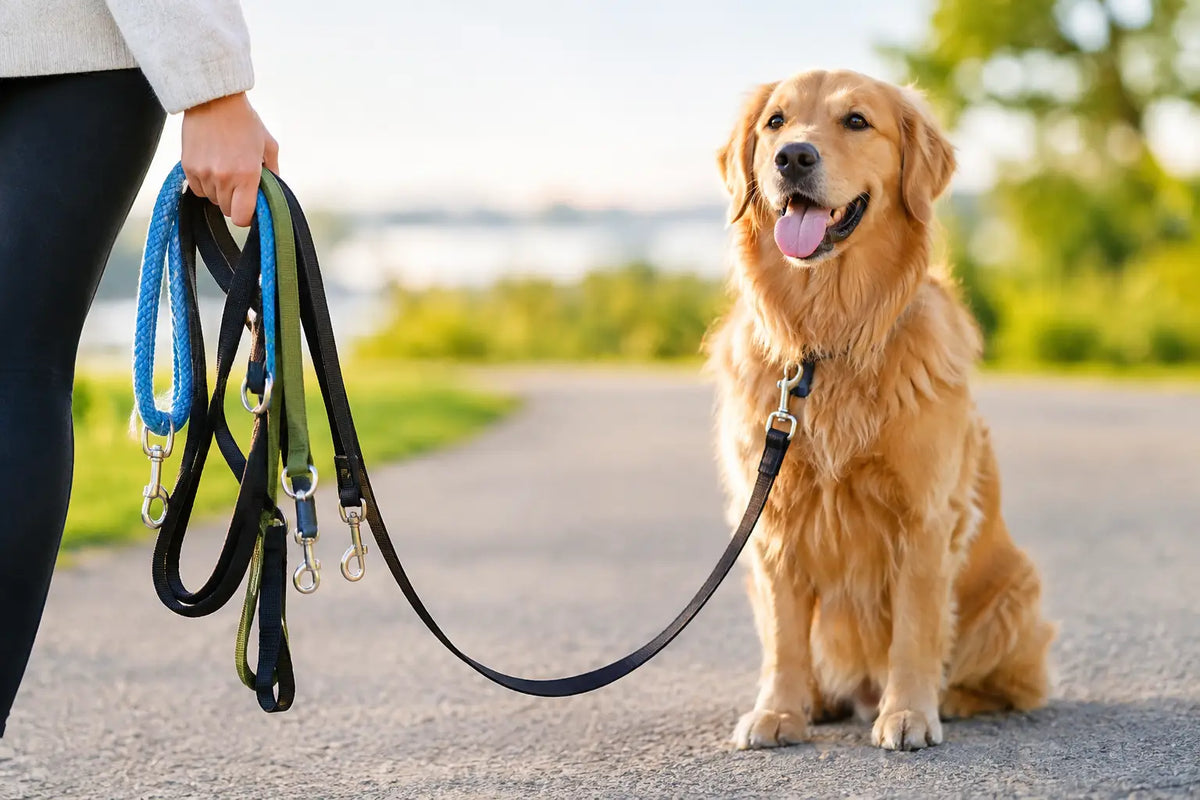
For most everyday walks, nylon and coated webbing are practical favorites because they are durable, easy to clean, and available in plenty of colors and prints. Leather is a beautiful, long-lasting choice for pet parents who appreciate a softer hand feel and are willing to give it a little care. Rope leashes can be especially comfortable and strong for active outings, while lighter materials may better suit tiny dogs who do not need a bulky lead.
The right choice depends on your dog, your climate, and the kind of walks you actually take. A calm little companion strolling dry neighborhood sidewalks has different needs from a strong, playful doodle who loves muddy trails, beach days, and surprise rain showers.
Nylon: a cheerful everyday classic
Nylon is one of the most common leash materials for good reason. It is lightweight, affordable, strong for its weight, and easy to find in colors, patterns, and coordinated walkwear sets. If you love switching up your pup’s look for a season, holiday, or special outing, nylon gives you plenty of stylish possibilities without making everyday walks feel precious.
It also handles routine cleaning well. A nylon leash can usually be hand-washed with mild soap and left to air-dry after a muddy afternoon at the park. This makes it a lovely fit for busy pet parents who want something dependable and cute without a demanding care routine.
There are trade-offs. Flat nylon can feel slippery when wet, and a thin leash may dig into your hand if your dog pulls. The texture can also become rough around the edges after heavy use. Look for smooth, tightly woven nylon, neatly finished stitching, and hardware that feels substantial rather than flimsy. For a stronger dog, leash width matters just as much as material.
Best for
Nylon is a sweet all-around option for everyday neighborhood walks, puppies, coordinated outfits, and dogs that do not pull heavily. It is also a smart choice when you want a few different looks in your walkwear rotation.
Leather: polished, soft, and made to last
A quality leather leash has a certain timeless charm. It becomes softer with use, often feels wonderfully comfortable in the hand, and can last for years when cared for properly. For dog moms who lean toward elevated neutrals, classic hardware, and pieces that age gracefully, leather has a lovely boutique feel.
Leather is not just about looks. A well-made leather leash can offer excellent grip, especially compared with slick synthetic straps. It has a little natural give when a dog reaches the end of the leash, which some handlers find more forgiving during everyday movement. That said, leather is not a magic solution for pulling. Training, a secure harness or collar, and the right leash length still matter most.
Its biggest downside is maintenance. Leather should not be left wet, soaked repeatedly, or stored dirty after a muddy walk. It needs gentle cleaning and occasional conditioning to help prevent drying and cracking. It may also be a poor match for a pup who thinks every leash is a chew toy, since teeth can quickly damage even a beautiful piece.
Best for
Choose leather if you want a refined everyday leash, enjoy caring for quality accessories, and usually walk in relatively dry conditions. It is especially lovely for calmer dogs and pet parents who value a soft, broken-in feel.
Rope: secure grip for active pups
Rope leashes are typically made from braided nylon or climbing-rope-inspired materials. Their round shape is comfortable to hold, and the texture often gives your hands more grip than a flat leash. Many are designed with sturdy clips and reinforced joins, making them a popular choice for dogs who are energetic, athletic, or simply excited about every single sniff.
For hikes, longer walks, and weekend adventures, rope can feel reassuringly substantial without becoming overly heavy. It also tends to look polished in a casual, outdoorsy way, especially when paired with a coordinating harness, bandana, or waste bag dispenser.
Still, not every rope leash is equal. A very thick rope can feel heavy for a toy breed, while a thin rope may not provide enough hand comfort for a powerful puller. Inspect the connection points closely. The area where the rope meets the clip or handle should be professionally finished, tightly secured, and free of fraying.
Best for
Rope works beautifully for active medium and large dogs, pet parents who prefer a secure hand feel, and families who trade the sidewalk for trails, parks, and weekend outings.
Coated webbing: easy cleanup for messy moments
Coated webbing, often called waterproof or Biothane-style material, has become a favorite for dogs who believe puddles, ponds, and wet grass are invitations. It has a flexible webbing core with a smooth protective coating, giving it a leather-like appearance while making cleanup remarkably simple. Wipe it down after a rainy walk or rinse away mud, and it is ready for the next adventure.
This material does not absorb water the way fabric leashes do, so it is less likely to hold odors or stay damp in your entryway. It is also available in playful, saturated colors that look fresh against all kinds of fur.
The smooth finish can be less comfortable for some hands during strong pulling, particularly if the leash is narrow. In cold weather, it may feel stiffer than nylon or leather. It is best to choose a width appropriate to your dog’s size and use a secure wrist loop whenever you are near traffic or distractions.
Best for
Coated webbing is ideal for rainy climates, beach trips, muddy paws, water-loving dogs, and anyone who wants a low-fuss leash that still feels polished.
Do not choose by material alone
The safest, prettiest material in the world cannot make up for a leash that is the wrong length, width, or hardware strength. A standard 4- to 6-foot leash offers reliable control for most daily walks. Shorter leashes can be useful in busy spaces, while longer training leads are better reserved for supervised recall practice rather than regular city walking.
Pay attention to the clip, ring, stitching, and handle. A leash should clip smoothly to your dog’s harness or collar and stay closed under normal movement. If your pup is a serious puller or weighs more than average for their leash width, select hardware rated for their size and inspect it regularly for wear.
Your dog’s comfort matters, too. A leash should not be attached to a collar that puts pressure on the throat when your dog pulls. For many dogs, especially enthusiastic walkers, a properly fitted harness offers more comfortable control. The leash and harness should work together as a thoughtful little team.
Match the leash to your real life
If your pup takes one leisurely block around the neighborhood before breakfast, a soft nylon or leather leash may be all you need. If your weekend plans include parks, road trips, and unpredictable weather, rope or coated webbing may earn its place as your grab-and-go favorite.
Many pet parents enjoy having more than one leash. Think of it as a small walkwear wardrobe: a polished leather option for everyday errands, a washable waterproof leash for wet weather, and a cheerful nylon or rope style for matching your pup’s personality. At Luna Doodle Boutique, we believe practical pieces can still make ordinary moments feel a little more special.
Before each walk, take a quick look at the clip, stitching, and leash surface. Replace a leash with deep fraying, cracks, damaged hardware, or bite marks. Then choose the one that lets you feel present, confident, and ready to enjoy the walk - because the best material is the one that helps your favorite little sidekick explore safely by your side.